
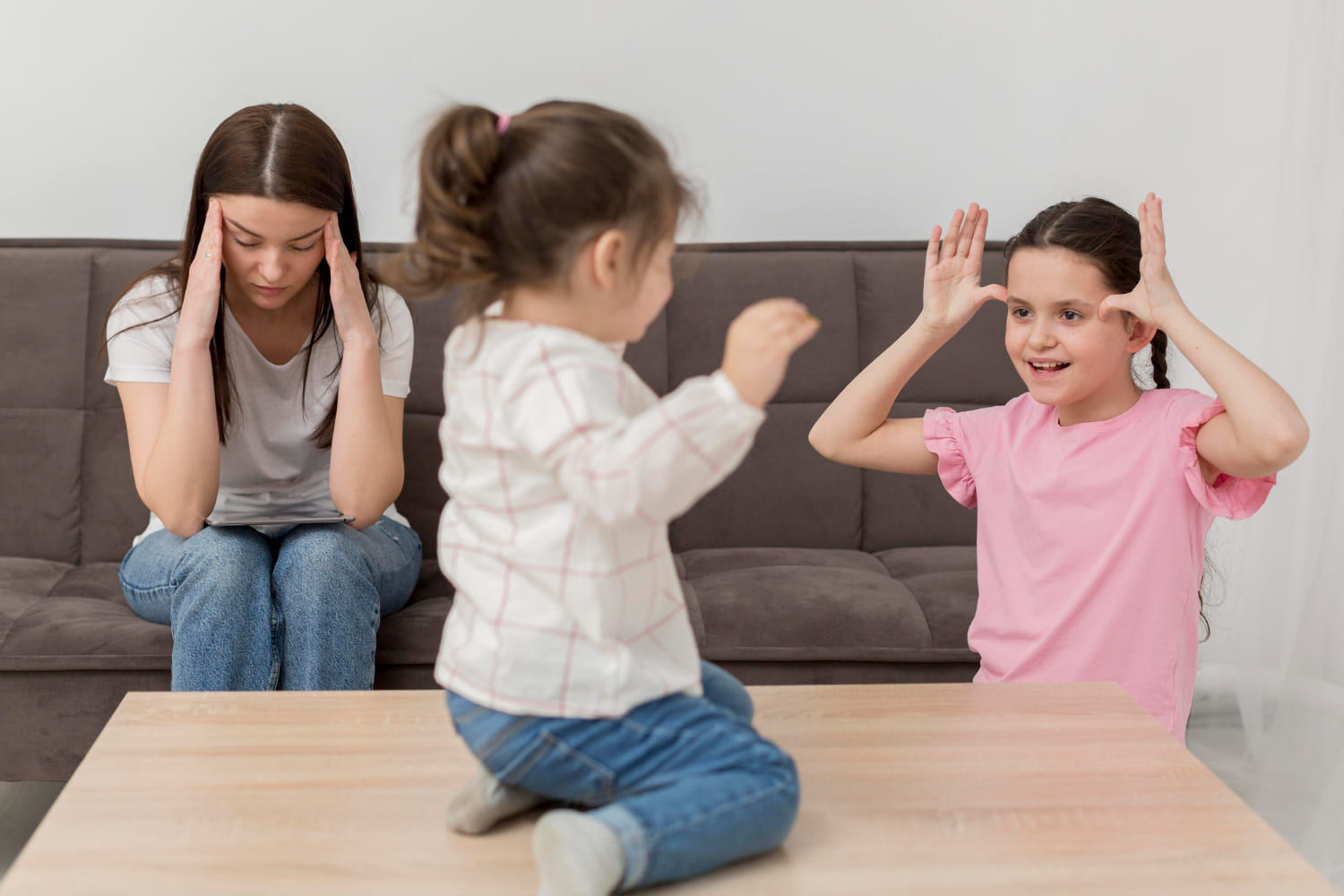
If you have ever caught yourself thinking, “I have no patience for my ADHD child,” and then immediately felt a wave of guilt wash over you, this article is for you.
Most parents do not say this thought out loud. They whisper it in their head while doing dishes, sitting in the car after school pickup, or lying awake at night replaying the day. And when the thought shows up, it is usually followed by shame. Good parents should be patient. Loving parents should know better. Calm parents should not feel this way.
But ADHD parenting does not exist in a calm, quiet bubble.
It exists in repeated instructions, emotional outbursts, forgotten routines, constant redirection, and a level of mental load most people never see. It exists in loving your child deeply while feeling completely depleted. It exists in trying again tomorrow even when today felt impossible.
This article is not here to fix you or your child. It is here to explain why patience feels so hard right now, what is actually happening beneath your child’s behavior, and how you can begin to cope without losing yourself in the process.
We will talk about ADHD parenting stress, emotional burnout, behavior versus biology, and practical ways to regain calm that do not require perfection. We will also talk about ADHD parenting support and when it is okay to stop doing this alone.
You are not failing.
You are exhausted.
And that matters.
Why You Feel This Way? Well, It’s Not Your Fault
Patience does not disappear because you are a bad parent. It disappears because your nervous system has been under pressure for too long.
Parenting a child with ADHD often means living in a near-constant state of alert. You are anticipating the next meltdown, the next forgotten task, the next call from school, the next moment where you have to intervene. Even on good days, your brain rarely rests.
This is ADHD parenting stress, and it accumulates quietly.

Many parents are also carrying this load without enough external support. Appointments are hard to get. Advice from others is often dismissive. You may hear things like “just be more consistent” or “they will grow out of it,” which only adds to the feeling that you are doing something wrong.
ADHD also involves executive dysfunction. This affects planning, impulse control, emotional regulation, and follow-through. Your child may want to listen, want to comply, and still struggle to do so in the moment. When this happens repeatedly, it can feel personal, even though it is neurological.
Over time, chronic stress changes how your own brain responds. Your tolerance window shrinks. Small behaviors feel bigger. Noise feels louder. Interruptions feel unbearable. This does not mean you love your child less. It means your system is overloaded.
Feeling impatient is not a moral failure. It is a signal.
Understanding ADHD Behavior vs. “Bad” Behavior
One of the most painful patterns in ADHD parenting is feeling like discipline does not work the way it should.
- You explain calmly. It does not stick.
- You set consequences. The behavior repeats.
- You try harder. Everyone ends up more upset.
This is where ADHD child behavior problems are often misunderstood.
ADHD affects the brain’s ability to pause, shift attention, manage emotions, and regulate impulses. Many behaviors that look like defiance or disrespect are actually moments where the brain is overwhelmed and unable to self-correct in time.
Emotional dysregulation plays a major role. Feelings rise quickly and fall slowly. Transitions can feel physically uncomfortable. Frustration spills over before your child can stop it.
Related Read- 10 Powerful Benefits of Occupational Therapy for Children: Expert 2025 Guide for Parents
Traditional discipline strategies assume a level of internal control that ADHD brains are still developing. Repeated punishment can increase shame without improving regulation. Long lectures often overload attention even further.
This does not mean there are no limits. It means limits work best when paired with understanding how ADHD affects behavior in real time.
When you shift from asking, “Why won’t they listen?” to “What is getting in the way right now?” something changes. The situation may still be hard, but it becomes less personal.
How to Regain Your Patience Without Losing Yourself
If you are trying to learn how to stay calm with ADHD child moments, the most important place to start is not with strategies for your child. It is with your own regulations.
You cannot pour patience from an empty system.
One of the most overlooked truths in ADHD parenting is that parent regulation comes before child regulation. When your nervous system is overwhelmed, your ability to respond thoughtfully disappears. This is biology, not a weakness.
- Taking a pause when emotions rise is not abandonment. It is protection. Stepping away for a few minutes, taking a breath, or grounding yourself physically can prevent escalation on both sides.
- Noticing your triggers also matters. Many parents find certain moments, especially draining. Mornings. Homework time. Bedtime. Repetition without response. Journaling or reflecting on these patterns can help you anticipate stress instead of being blindsided by it.
- Mindfulness does not have to look perfect. It can be as simple as placing your feet on the floor and naming what you feel before responding. It can be one slow breath before speaking. These small pauses interrupt the stress cycle.
- Reframing thoughts is another powerful tool. Instead of “They are doing this on purpose,” try “This is their nervous system struggling.” This shift does not excuse behavior, but it reduces the emotional charge.
Related Read- Speech, Occupational, or ABA Therapy: Which One Comes First?
Learning how to stay calm with ADHD child interactions also means accepting imperfection. You will lose patience sometimes. What matters more than control is repair. Apologizing, reconnecting, and naming emotions teaches resilience far more effectively than pretending everything is fine.
Walking away when needed is not giving up.
It is choosing regulation over regret.
Practical Parenting Strategies That Actually Work
Empathy alone is not enough. Structure still matters. The most effective parenting tips for ADHD are the ones that reduce friction rather than increase control. Instead of trying to “fix” behavior in the moment, these strategies focus on supporting how an ADHD brain actually functions.
1. Make Expectations Visible, Not Verbal
Children with ADHD often struggle to hold instructions in their working memory. Visual cues reduce pressure on the brain.
- Visual schedules help externalize expectations
- Simple charts or pictures can reduce repeated reminders
- Seeing what comes next lowers anxiety and resistance
When expectations are visible, fewer power struggles show up.
2. Use Time as a Tool, Not a Threat
Transitions are one of the hardest moments for ADHD brains. Sudden demands can feel overwhelming.
- Timers give the brain time to shift gears
- Verbal warnings paired with a visual timer work best
- Consistency matters more than exact timing
A countdown prepares your child instead of startling them.
3. Create Routines That Support Regulation
Routines create a sense of safety. Predictability lowers stress for both you and your child.
This does not mean rigid schedules or perfection. It means having a general rhythm to the day that your child can rely on, even when emotions run high.
When routines are predictable, emotional energy is freed up for learning and connection.
4. Keep Consequences Simple and Immediate
Long explanations often overwhelm attention and increase frustration.
- Clear consequences work better than repeated warnings
- Short statements reduce emotional escalation
- Calm follow-through builds trust and consistency
Less talking, more clarity.
5. Reinforce Effort, Not Just Outcomes
Positive reinforcement is one of the most effective tools for ADHD parenting.
- Notice effort, even when results are imperfect
- Celebrate small wins and partial success
- Progress with ADHD is often gradual, not linear
Motivation grows when children feel seen, not constantly corrected.

6. Choose Battles With Your Child Intentionally
Not every behavior needs intervention. Constant correction exhausts both parent and child.
Parenting tips for ADHD include prioritizing:
- Safety
- Respect
- Emotional connection
Letting smaller things go preserves energy for what truly matters.
Some days, these strategies will work beautifully.
On other days, they will fall apart.
That does not mean you are doing it wrong.
It means you are parenting a human being with a variable nervous system.
When to Ask for Professional Help – Online or In-Person
There comes a point where coping alone becomes unsustainable. Recognizing that point is an act of awareness, not failure.
If you feel constantly angry, emotionally numb, or overwhelmed, support can help. Therapy gives parents space to process stress, learn regulation tools, and rebuild patience. ADHD coaching can provide practical strategies tailored to your family.
Support groups offer something many parents lack: understanding. Hearing others share similar experiences reduces isolation and shame. ADHD family support reminds you that this journey is shared.
For children, therapy can support emotional regulation, self-esteem, and behavior skills. Parent training programs strengthen communication and reduce daily conflict.
Bonus Read- What a Good Online Special Needs Therapist Actually Does in Session (Beyond Just Talking on a Screen)
Asking for help is not giving up control.
It is choosing sustainability.
Frequently Asked Questions Parents Are Afraid to Ask
1. Is it normal to feel angry if you think I have no patience for my ADHD child?
Yes. Feeling anger does not mean you are an unloving or unsafe parent. Anger often shows up when your emotional capacity has been exceeded. Parenting a child with ADHD requires constant attention, regulation, and repetition. When your own needs go unmet for long periods, frustration is a natural response.
What matters most is not whether anger shows up, but how it is handled afterward. Repair, reflection, and support matter far more than never feeling upset in the first place.
2. Why does my ADHD child ignore me even when I know they understand?
Many children with ADHD are not ignoring their parents intentionally. ADHD affects working memory, attention shifting, and impulse control. Your child may hear you, understand you, and still struggle to act on the instructions in that moment.
This can feel incredibly personal, especially after repeating yourself many times. Understanding that this is a processing issue, not a respect issue, can reduce emotional escalation for both of you.
3. Does ADHD make discipline ineffective?
Discipline is not ineffective, but traditional discipline often needs adjustment. Consequences that rely on delayed reflection or internal self-control may not work well for ADHD brains. Clear, immediate, and predictable responses are more effective than lengthy explanations or delayed punishments.
Discipline works best when paired with regulation support and realistic expectations.
4. How can I calm myself when I feel like I’m about to snap?
Start by creating space between feeling and reacting. This can mean stepping into another room, taking a slow breath, or grounding yourself physically. Naming your feeling silently can also help reduce intensity.
Calming yourself is not about suppressing emotion. It is about giving your nervous system time to settle so you can respond rather than react.
Learning how to stay calm with ADHD child moments takes practice and compassion toward yourself.
5. Is it okay to apologize to my child after losing patience?
Yes, and it is often beneficial. Apologizing does not undermine authority. It models accountability, emotional honesty, and repair. Children learn that relationships can recover after conflict, which is a critical life skill.
Simple apologies focused on your behavior, not your child’s reaction, are most effective.
6. How do I know if my stress level is becoming a bigger problem?
If you feel constantly irritable, emotionally numb, or hopeless, or if you dread daily interactions with your child, these may be signs that your stress has exceeded healthy limits. Difficulty sleeping, frequent guilt, or feeling disconnected from your child are also signals.
These signs do not mean you are failing. They mean you may need ADHD parenting support for yourself.
7. Should parents get therapy even if the child is already in treatment?
Yes. Parenting a child with ADHD affects the entire family system. Parent-focused therapy or coaching can help you process stress, learn regulation skills, and develop strategies that reduce daily conflict.
Supporting the parent often improves outcomes for the child as well.
8. What if nothing seems to work, no matter how hard I try?
This feeling is more common than many parents admit. ADHD strategies are not one-size-fits-all, and progress is rarely linear. Plateaus and setbacks do not mean failure.
When nothing seems to help, it may be time to reassess support, expectations, and your own well-being. ADHD family support can provide perspective, relief, and new tools.
9. Will this ever get easier?
Many parents report that things improve with time, understanding, and the right support. Easier does not always mean fewer challenges, but it often means better coping, stronger connection, and more confidence in handling hard moments.
Growth happens slowly, and it often begins with compassion rather than control.
Answer to “I have no patience for my ADHD child” – You’re Are Not Alone
If you arrived here thinking, “I have no patience for my ADHD child,” know that this thought does not define you. It reflects exhaustion, not lack of love.
Understanding ADHD behavior, caring for your own emotional health, and using realistic strategies can slowly change the tone of your days. Progress may be uneven. Some days will still feel heavy. Growth rarely happens in a straight line.
Parenting a child with ADHD requires compassion for them and for yourself. Repair matters more than perfection. Support is not optional. It is essential.
You are not broken.
Your child is not broken.
And you do not have to do this alone.